For a long time, most people used AI in a simple way.
They typed a prompt. The AI gave an answer. Then they changed the prompt and tried again.
That was useful. Prompt engineering helped business owners, developers, marketers, and software teams understand how to communicate with AI tools. It taught people that better context usually leads to better output.
But AI work is now moving into a new stage.
The next question is not only, “What should we ask the AI?”
The better question is, “What process should the AI follow?”
That is where loop engineering comes in.
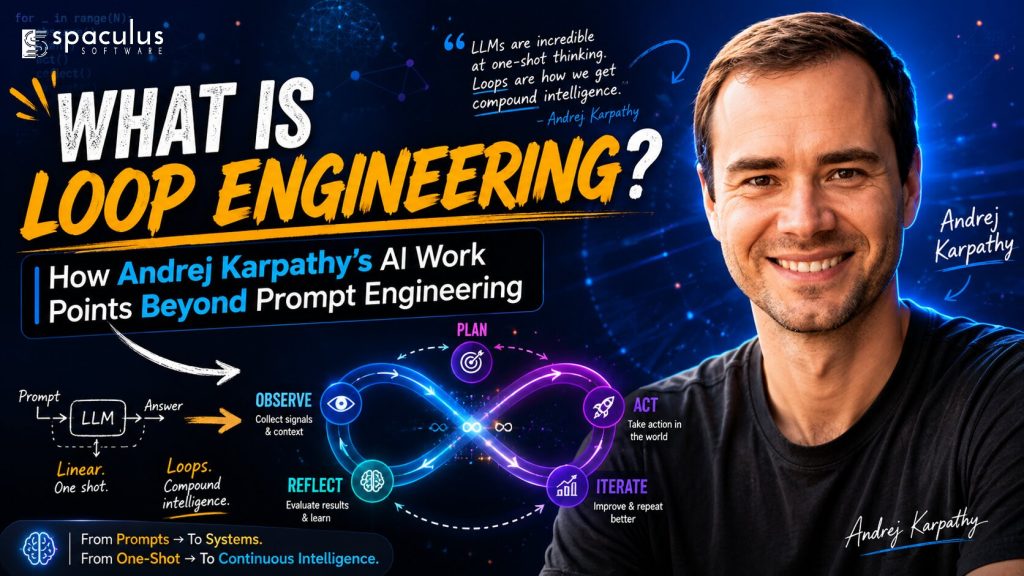
Loop engineering is about designing repeatable AI workflows. In these workflows, an AI agent can receive a goal, take action, check the result, improve its work, and continue until the task is complete or needs human review.
It is not magic. It is not full automation without limits. It is a more structured way to use AI inside real software systems.
Loop engineering means building a process around an AI agent.
Instead of giving one instruction and waiting for one answer, you create a loop where the AI can keep working through steps.
A simple example is how you manage a team member.
If you give an employee one small instruction every few minutes, they depend on you for every next step. But if you give them a goal, a process, the right tools, and clear rules for when to ask for help, they can make progress on their own.
AI loops work in a similar way.
The agent is not just told what to write. It is given a task, access to tools, checks for quality, and rules for stopping or escalating.
A basic loop may look like this:
Understand the goal.
Take the next useful action.
Check the result.
Fix the problem or improve the output.
Repeat until the work is done or human review is needed.
That repeated cycle is the loop.
Prompt engineering is about writing better instructions.
Loop engineering is about designing a repeatable workflow.
Prompting asks AI for an answer.
Looping gives AI a goal, tools, checks, and a process.
For example, a prompt might say:
“Summarize this customer support ticket.”
A loop would go further.
It might read the ticket, check the customer’s history, identify the issue, draft a reply, compare it with company policy, flag anything risky, and send the response to a human for approval.
That is a different kind of AI use.
Prompt engineering is still useful. Clear instructions still matter. But in more advanced AI systems, the prompt is only one part of the design.
The bigger question is what happens after the first answer.
Does the AI check its work?
Can it use tools?
Can it run tests?
Can it compare the output against rules?
Does it know when to stop?
Does it know when to involve a person?
These are workflow and software architecture questions, not just prompt questions.
Andrej Karpathy is one of the most influential people in modern AI. He was a founding member of OpenAI, later led AI work at Tesla, and is widely known as an AI educator and builder.
His recent public thinking and projects are useful because they show where AI development is heading.
Karpathy has spoken about “Software 3.0,” where natural language becomes a new way to work with computers. He has also discussed agentic engineering, where developers guide AI systems that can write, test, revise, and improve code with human supervision.
His AutoResearch project is another useful example. It points to the idea of AI agents supporting repeated research-style workflows, where experiments, results, and improvements can be handled in cycles. Some developers and writers describe this kind of pattern as the “Karpathy Loop.”
The important point is not the label.
The important point is the shift.
AI is moving from one-time answers toward systems that can work through repeated cycles.
That matters because most real business problems are not solved in one response. They need testing, checking, correction, and judgment.
Take a software development example.
An AI coding agent receives a goal: fix a bug in a payment workflow.
A basic chatbot might explain possible causes. It may suggest a code change. Then a developer must manually test and continue the process.
A loop-based AI workflow can do more.
The agent can read the codebase, inspect the payment module, suggest a change, edit the code, run tests, review errors, fix failed tests, and repeat.
If the tests pass, it can prepare a summary for a developer.
If the issue is risky or unclear, it can stop and ask for human review.
This same pattern can apply in many areas.
In research, an AI loop can collect sources, compare findings, summarize gaps, and improve a report.
In customer support, it can classify tickets, draft replies, check policies, and escalate complex cases.
In data analysis, it can clean data, test assumptions, generate charts, and flag unusual results.
In documentation, it can review product changes, draft updates, and ask a reviewer to approve them.
In QA testing, it can run test cases, record failures, suggest fixes, and retest.
In business process automation, it can move information between systems, check rules, and prepare next actions.
The goal is not to remove people from the process.
The goal is to let AI safely repeat useful steps while humans stay involved where judgment, risk, or approval is needed.
Loop engineering matters because it changes how businesses can use AI.
Many teams still use AI manually. An employee opens a tool, writes a prompt, copies the output, edits it, then repeats the same process later.
That can save time, but it is limited.
With loop-based workflows, companies can reduce repetitive prompting. They can build AI systems that support real business processes.
This can help teams experiment faster. Developers can test ideas quickly. Product teams can analyze feedback. Support teams can prepare better responses. Operations teams can monitor routine work and surface exceptions.
For software teams, the opportunity is practical.
AI agents can help with debugging, test generation, code review, documentation, migration planning, and internal tools. They can handle some repetitive steps, while developers focus on architecture, product thinking, security, and final review.
But businesses should not treat this as automatic success.
The more an AI system can do, the more control it needs.
Companies need clear permissions, monitoring, logs, testing, cost controls, and approval points. They need to define what the AI can access, what it can change, and when it must stop.
Loop engineering is not only about speed.
It is about safe repetition.
Loops can create wrong outputs faster if they are poorly designed.
A bad prompt may produce one bad answer. A bad loop may produce many bad actions before anyone notices.
There are also cost risks. AI loops can use more tokens because the system keeps reading, thinking, acting, and checking. If multiple agents are involved, the cost can increase quickly.
Errors can also become harder to trace.
When an AI agent takes many steps, uses tools, and revises its own work, teams need clear logs. Without logs, it becomes difficult to understand what happened and why.
Architecture also matters.
If a business adds AI loops on top of messy data, weak APIs, unclear rules, or poor permissions, the workflow may break in real situations. It may look impressive in a demo but fail during daily use.
Human review still matters.
In finance, healthcare, legal, security, enterprise operations, and customer-facing systems, AI should not have unlimited freedom. The safest approach is usually to let AI handle repeatable work and keep people involved for important decisions.
From a custom software and AI-development perspective, loop engineering shows an important shift.
The future of AI adoption is not only about choosing the best model.
A strong model helps, but it is not enough.
Businesses need to design the right workflow around the model.
What data can the AI access?
What tools can it use?
When should it stop?
Who reviews the output?
How are errors handled?
How does it connect with existing business software?
These questions are becoming central to AI adoption.
For many companies, the first AI experiment is a chatbot. That is a useful starting point. But real business value often comes when AI is connected to workflows, databases, CRMs, ERPs, support platforms, analytics systems, document tools, and internal software.
That is where software architecture becomes important.
An AI loop needs clear inputs, secure access, reliable integrations, testing, fallback paths, and audit trails. It needs permissions that match business risk. It needs a clear way to involve people at the right moments.
This is why AI integration is becoming a software architecture decision, not just a chatbot experiment.
Loop engineering helps businesses ask a better question.
Instead of asking, “What prompt should we use?”
They should ask, “What repeatable workflow can AI safely support?”
That is a much more useful way to think about AI in real business software.
Loop engineering does not mean prompt engineering is useless.
It means AI work is becoming more structured.
Prompts helped people learn how to communicate with AI. Loops are helping teams think about how AI can work through tasks with goals, tools, checks, and human review.
Andrej Karpathy’s recent public thinking and projects offer one clear example of this shift. His work around agentic engineering and autonomous research-style workflows shows how AI systems can move beyond one-time responses and start working through repeated cycles.
But the takeaway should stay grounded.
The winners will not be the companies that chase every AI buzzword. They will be the companies that understand where AI can safely repeat work, where humans must stay involved, and how to build reliable software systems around intelligent agents.
That is the real opportunity behind loop engineering.

From overhauling online platforms to backroom engineering, Google, Apple, Amazon, Microsoft, Meta, and TikTok owner ByteDance have scrambled over the last six months to comply with landmark EU tech rules that come into force on Thursday. The Digital Markets Act (DMA) is one of the most comprehensive regulatory actions to rein in so-called “Big Tech” […]

Over the past week, NVIDIA made a bold statement: data center spending is heading for the trillion-dollar mark. Not over decades. But soon. Most headlines called it a milestone forecast. Investors saw a stock bump. Tech media ran the usual cycle. But here’s the truth: This isn’t a sudden explosion. It’s the culmination of years of slow, structural change […]

Meta Platforms’s Instagram appeared to be back online for most users after an outage disrupted services for the photo-sharing platform for more than three hours on Thursday, according to Downdetector.com. The number of outages has come down to around 400 after more than 5,000 users reported issues with accessing Instagram in the United States around 2230 GMT, […]
The launch of GPT-5 is more than a software update. It’s a business turning point. Built with memory, multimodal input, and autonomous execution, GPT-5 marks a new class of AI. Not just smarter responses—strategic collaboration. For CEOs and CTOs, this means rethinking automation, data governance, decision cycles, and risk. Because this isn’t about testing another tool. It’s about preparing […]

An average of eight in ten top business executives globally feel more or as exposed to cybercrime than they did last year, a new survey showed on Thursday. The World Economic Forum’s Global Cybersecurity Outlook 2024 report, prepared in collaboration with Accenture, also flagged threats posed by AI-generated deepfakes to spread false information about candidates […]

Genie 3 is DeepMind’s newest “world model” — an AI system that turns plain text prompts into playable, explorable environments in real time. Type something like “tropical island at sunset with wooden huts and moving waves,” and within seconds, Genie 3 will create that scene. You can walk around inside it, change weather, add objects, […]
Artificial Intelligence is advancing at an incredible pace, and Baidu, one of China’s biggest tech companies, is leading the charge. On March 16, 2025, Baidu introduced two cutting-edge AI models: Ernie 4.5 and Ernie X1. These models are designed to handle multiple types of data (like text, images, and videos) and have advanced reasoning capabilities. […]
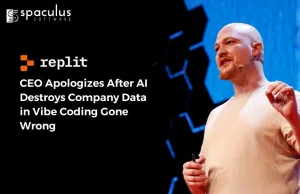
A wake-up call for CEOs, CTOs, and business leaders who’ve placed blind trust in autonomous AI agents What if your most valuable business data vanished overnight? You didn’t click delete. You didn’t click delete. You didn’t approve any change. You even typed “NO MORE CHANGES” in all caps. And yet, the AI agent running your app went ahead and […]

Four months ago, Yann LeCun left Meta. This week, he came back with $1.03 billion and a plan to challenge how AI is built. His new startup, Advanced Machine Intelligence Labs or AMI Labs, just closed the largest seed funding round a European company has ever raised. No product. No revenue. About twenty employees. And […]

All the Big Tech companies along with others like Intel, IBM, Netflix, Facebook, and Spotify use Python as their primary language. Google has reportedly handed pink slips to its entire Python team in the US. But should it cause fear among Python developers across the industry? Studies suggest otherwise. As per a 2023 Developer […]

Apple is on the verge of a ban on two of its latest smartwatches in its home country. The ban could impact the American brand’s $17 billion business. However, the company is working on software fixes for the Watch Ultra 2 and Watch Series 9 to prevent this, according to a report by Bloomberg. Apple […]
The Market Didn’t Panic Over a “Chatbot.” It Panicked Over a New Software Model. A sudden selloff wiped roughly $285 billion from the market value of software and information-service stocks in a single trading session after investors digested news around Anthropic’s Claude Cowork, a new agentic AI product that goes far beyond conversational AI. This wasn’t a reaction to “Claude being smarter.” It was a […]

AI just got a whole lot more accessible and you don’t need expensive hardware to be part of it. Imagine buying a brand new smartphone but being told you can only use it if you also buy a $3,000 accessory. That’s basically what running AI has felt like for the past few years. Want to run a powerful AI model on your own computer? You need […]
The AI industry is booming—but beneath the surface, it’s riddled with a quiet crisis. While the world is captivated by advancements in large language models, multimodal capabilities, and generative tools, a large number of AI startups are quietly folding. This isn’t about bad tech. In fact, many of these companies are shipping some of the […]

In a move set to revolutionize the battle against counterfeit luxury items, tech company Entrupy is harnessing the capabilities of artificial intelligence (AI) to provide consumers with a definitive answer on the authenticity of designer handbags and sneakers. The company, established in 2012 and supported by industry giant Louis Vuitton, asserts its ability to accurately […]
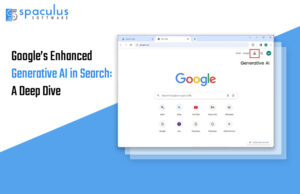
Google has significantly upgraded its search engine using generative AI. These updates aim to make search results more useful, detailed, and easier to understand. Let’s take a closer look at these new features, how they work, their benefits, and any potential downsides Key Features of Google’s Enhanced Generative AI in Search AI Overviews Quick Summaries […]

OpenAI is facing another privacy complaint in the European Union. This one, which has been filed by privacy rights nonprofit Noyb on behalf of an individual complainant, targets the inability of its AI chatbot ChatGPT to correct misinformation it generates about individuals. The tendency of GenAI tools to produce information that’s plain wrong has been well documented. […]

Quick Take Google’s Gemini CLI is here — and it’s not just another developer tool. It’s a sign that AI isn’t coming for business workflows someday. It’s happening right now. If you’re a founder or business leader, ignoring this shift could cost you speed, savings, and a serious competitive edge. Gemini CLI: More Than a […]

Luma AI has introduced a groundbreaking AI-powered tool called Dream Machine, revolutionizing the way videos are generated from text and image prompts. This innovative technology enables users to create high-quality, realistic videos by simply typing a description or uploading an image. Dream Machine stands out in the rapidly evolving AI video generation market by offering […]

What’s Driving All the GPT‑5 Buzz Right Now? You don’t need to be an AI researcher to feel the shift. People are sensing something different with GPT‑5. It’s not just about what the next version of ChatGPT can “say”-it’s about what it might do. And that’s a major pivot. While previous versions felt like upgraded calculators, […]

2023 has been the year of generative AI chatbots and the Large Language Models (LLMs) behind them. These models have been growing exponentially, and some AI experts are worried that this could be dangerous for humanity. They argue that things shouldn’t be progressing at this rate, especially without supervision. That said, experts have voiced their […]

Over the past few years, we’ve seen Microsoft shift its focus to generative AI and its advances, especially after making a multi-billion investment into the technology, further extending its relationship with OpenAI. Microsoft, a global leader inartificial intelligence (AI) technology, has announced its plans to establish a groundbreaking AI hub in London. This strategic move underscores […]

It is a universal truth of human nature that the developers who build the code should not be the ones to test it. First of all, most of them pretty much detest that task. Second, like any good auditing protocol, those who do the work should not be the ones who verify it. Not surprisingly, […]
Want AI inside your Word documents, Excel sheets, PowerPoint slides, and Outlook inbox? Until now, Microsoft Copilot was the obvious answer. That just changed. Anthropic has expanded Claude across Microsoft 365 apps, with Outlook currently in public beta. What just happened Anthropic has flipped the switch on Claude inside Excel, PowerPoint, and Word, with Outlook joining in […]

Apple announced iOS 26 last week. Most headlines focused on “Liquid Glass.” Some called it the biggest redesign in years. But if you’ve been in tech long enough, you already know the truth: This isn’t a revolution. It’s a reframing. No dramatic leap. No breakthrough AI. Just enough change to force businesses to catch up. And that’s exactly why […]

Web3.0, seen as the future of the digital landscape, is expected to shape 2024 based on developments in 2023. The year witnessed regulatory strides, moving from skepticism to frameworks, and clarity in the crypto and blockchain space. In terms of investments, Web3.0 attracted $549 million in September 2023, with a total of 118 deals. Notably, […]

Artificial intelligence has advanced rapidly over the past few years, but many updates have felt incremental to everyday users. Faster responses, better phrasing, and improved creativity were noticeable, yet the underlying experience often remained the same: a powerful chatbot that still struggled with long-term reasoning, consistency, and complex real-world tasks. With the release of ChatGPT […]

Anthropic has introduced Claude Duet, a proactive AI agent designed to monitor connected workplace applications, identify important updates and complete tasks while users are away. Unlike a conventional chatbot that normally waits for a prompt, Claude Duet can notify users when something needs attention and continue working in the background. The company opened a research […]
95% number landed like a brick. An MIT Media Lab project says the vast majority of enterprise generative-AI pilots delivered no measurable impact on profit and loss. US business owners understandably want to know what’s real: is this another hype cycle set to pop, or are we missing the basics of how to make AI […]

Check Point Software Technologies Ltd. today announced its collaboration with NVIDIA to enhance the security of AI cloud infrastructure. Integrating with NVIDIA DPUs, the new Check Point AI Cloud Protect solution will help prevent threats at both the network and host levels. “AI provides great benefits across healthcare, education, finance and more. At the same […]

The UK’s supreme court has ruled that AI cannot be named as an inventor and secure patent rights. It follows earlier decisions from lower courts that reached the same conclusions. On Wednesday, US computer scientist Stephen Thaler lost his attempt to register patents for inventions he says were created by his AI system, DABUS. Thaler […]

Anthropic’s Claude Code has exposed internal source code for the second time in under a year. At this point, it’s fair to ask whether there’s a deeper problem with how these tools are managed behind the scenes. What went wrong Claude Code is a developer tool designed to help people write and navigate code. But somewhere along the way, it started surfacing […]

For years, one of Gmail’s most frustrating rules was also one of its simplest: if you created an @gmail.com address, you were stuck with it. You could change your display name, add dots, or use “+” aliases but you generally could not change the actual Gmail username (the part before “@gmail.com”) without creating an entirely new account. […]
Last week, OpenAI quietly introduced its latest model, o3‑pro — and while the headlines were minimal, the implications are significant. No massive press event. No flashy interface demos. Just a quietly released update aimed at something more strategic: practicality. And that’s exactly what makes it worth your attention. Not a Breakthrough — A Strategic Correction […]

Data security concerns are proving to be a substantial impediment to the widespread deployment of AI. Consequently, companies are unsurprisingly leveraging AI itself to tackle these apprehensions. As businesses in various sectors increasingly adopt AI to enhance processes and ensure more precise decision-making, the utilisation of AI-powered security technologies becomes crucial. These technologies can rapidly […]
The release of GPT 5.1 marks an important moment in the fast moving world of artificial intelligence. This update is not a small step. It pushes the model closer to becoming a practical tool that people can rely on in real work. The new version focuses on better reasoning more control over tone and deeper […]
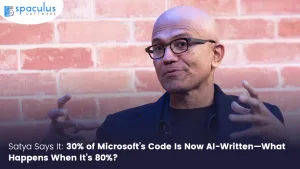
A Quiet Revolution in Plain Sight In April 2025, Satya Nadella made a statement that stopped the software world in its tracks. Speaking with Mark Zuckerberg at Meta’s LlamaCon, he revealed that around 30% of Microsoft’s code is now generated by AI tools. Not theoretical code. Not experimental. Production code—inside real repositories at one of […]
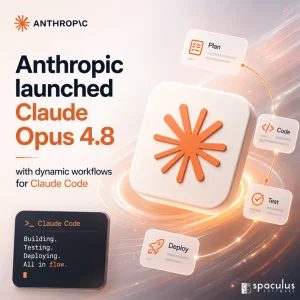
Claude Code Is Becoming More Than a Coding Assistant Anthropic has launched Claude Opus 4.8, and it arrives at a time when AI coding tools are changing very quickly. At first, this may look like another model update. Better coding. Stronger reasoning. Improved tool use. More reliable long-session work. These are all useful improvements, especially […]
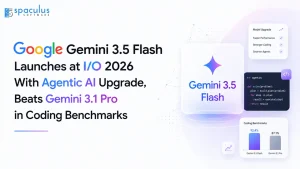
Google is making its fast AI model harder to ignore. At Google I/O 2026, the company introduced Gemini 3.5 Flash, a new version of its Flash model built for faster coding, agentic AI tasks, and business workflows that need quick results. This is not just a small model refresh. Until now, Flash models were mostly […]
Artificial Intelligence (AI) has made significant strides, bringing us models that are more powerful and capable with each iteration. One such model that’s making a big impact is Llama 3.1. Let’s dive into what makes Llama 3.1 special, compare it with other major AI models like ChatGPT and Claude, and explore how businesses can leverage […]
Kyutai has launched Moshi, an advanced AI model that’s set to revolutionize the AI landscape. Moshi is built on a 7-billion-parameter model, Helium-7B, which processes both text and audio data simultaneously. This allows for a more natural and fluid interaction, akin to conversing with a human. Moshi isn’t just about understanding text; it’s designed to […]

The web’s video misinformation problem is set to get a lot worse before it gets better, with OpenAI CEO Sam Altman going on the record to say that video-creation capabilities are coming to ChatGPT within the next year or two. Speaking to Bill Gates on the Unconfuse Me podcast (via Tom’s Guide), Altman pointed to […]

OpenAI is reportedly working with Broadcom to roll out its first in-house AI chip by 2026. That’s more than news, it’s a signal. A signal that the AI wars are no longer just about models and data; they’re about controlling the silicon behind them. The National CIO Review (among others) reports that the chip will […]

Microsoft first launched its AI-powered Office features for businesses in November, but just two months later the company is already offering them to consumers. Copilot Pro is launching today as a $20 monthly subscription that provides access to AI-powered features inside Office apps like Word, Excel, and PowerPoint alongside priority access to the latest OpenAI […]
A group of 11 nonfiction authors have joined a lawsuit in Manhattan federal court that accuses OpenAI and Microsoft (MSFT.O) of misusing books the authors have written to train the models behind OpenAI’s popular chatbot ChatGPT and other artificial-intelligence based software. The writers, including Pulitzer Prize winners Taylor Branch, Stacy Schiff and Kai Bird – […]

Prime Minister Narendra Modi recently said India will lead the world in AI capabilities and exhorted young entrepreneurs and startups to work on “Indian solutions for global applications” to solve challenges faced by nations worldwide. Addressing the Startup Mahakumbh, Modi said the three missions on AI, semiconductors, and quantum, launched by the government earlier, will […]

OpenAI is making its flagship GPT-5.6 Sol model available on Cerebras infrastructure, delivering output speeds of up to 750 tokens per second. Cerebras says this configuration can run Sol up to 10 times faster than its regular mode, giving developers a lower-latency option for complex AI applications. The development combines GPT-5.6 Sol’s advanced reasoning capabilities […]

Danish scientists developed an AI chatbot, life2vec, that can predict potential life events, including health issues and financial success, based on individuals’ data. However, it has been misinterpreted as a ‘death calculator’, leading to privacy concerns. Lots of people are curious about how they’ll die, even though it’s not a fun topic. Some have looked […]

Adobe has moved Photoshop from a tool you click to a partner you direct. At Adobe MAX on October 28, 2025 the company introduced an AI Assistant for Photoshop that runs on agentic AI. You describe outcomes. The assistant carries out multi-step edits. It recommends next actions. You can switch back to manual control at […]

The PC market has had quite a few tough quarters in a row. According to a report by IDC, there has been an “unprecedented trend” in the PC market — two consecutive years of double-digit year-over-year drops. However, the research firm is optimistic about the market’s recovery. “Despite the short-term challenges, IDC continues to expect […]

Artificial Intelligence (AI) is one of the most powerful tools developed in recent decades. And, as the saying goes, with great power comes great responsibility. This power raises concerns about bias and the spread of misinformation through AI-generated content. For businesses, those are just some of the risks they need to address when using AI products. Businesses that fail […]
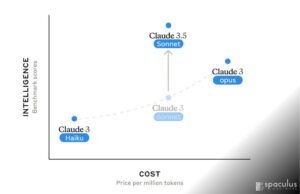
In a significant advancement in AI technology, Anthropic has unveiled Claude 3.5 Sonnet, the latest version of their sophisticated AI model. This release brings several enhancements that position Claude 3.5 Sonnet as a strong competitor to OpenAI’s ChatGPT 4. Here’s an in-depth look at Claude 3.5 Sonnet, its new features, and a comparison with ChatGPT […]
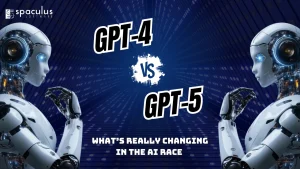
GPT-5 is live in ChatGPT and the API. It’s stronger on coding, math, and multimodal tasks, and it gives you new controls for reasoning and verbosity. GPT-4.1 still has the largest context window. Use GPT-5 for agents, code edits, and tool chains; use 4.1 when you truly need million‑token single shots. What changed at a […]
AI (Artificial Intelligence) has been progressing at a steady rate, but it has come under fire for the lack of transparency behind its programming. In the past few years, however, we’ve seen a wave of AI-powered services that are transparent and verifiable, meaning that users can trust that they are getting what they want. There […]
Grok 4: More Than Just a Chatbot Elon Musk’s Grok 4 has arrived. Some people see it as another chatbot. Others think it’s a political tool. But there’s a growing question in business circles: “Can Grok 4 actually help companies understand markets and competitors better than anything else?” That’s where the real story begins. Why […]

India’s digital landscape is undergoing a profound transformation, mirroring the global shift towards digitization and technological advancement. Businesses across sectors, from established enterprises to government departments and startups, are recognizing the imperative of digital transformation to not just survive but thrive in today’s competitive market. A report by IDC sheds light on this trend, revealing […]

Nvidia is on a roll! Yesterday, the company unveiled a whole new GPU, the RTX 2000 Ada. Now, the company has just come out with an early version of a new app called Chat with RTX, and it’s pretty exciting for anyone with a newer Nvidia graphics card. This app is all about letting your computer do […]

Meta just dropped something serious in the AI game—LLaMA 4. And it’s not just another big model in a crowded space. It’s a bold move to challenge OpenAI, Anthropic, DeepSeek, and Perplexity—on their turf. If you’re a developer, founder, or product owner wondering whether you should switch tools or double down on ChatGPT—this breakdown’s for […]

Nvidia entered “correction territory,” after shares briefly fell 10% from their most recent all-time closing high. Shares had recovered by Wednesday’s close when they were only about 8% off the high. The company, which makes graphics processing units — or GPUs — has been a key beneficiary of the artificial intelligence boom, which boosted demand […]

When you type into an AI model, where does that data go? Who sees it? Can it train the AI? And how long is it stored? These aren’t hypothetical concerns. In 2025, prompt data is a business asset — and a potential liability. We dug deep into the actual privacy policies, terms, and legal pages […]
The Prebuilt Hype That Swept the Tech World For years, business owners have been bombarded with a seductive message: “Why hire developers? Just pick a prebuilt tool, click a few buttons, and launch your app.” Platforms with sleek UIs and bold claims have flooded the market. Builder.ai, Bubble, OutSystems, Appgyver — all promised to make […]

Social media platform X suffered an outage for over one hour on Thursday, with users complaining that they could not access posts on the platform. The services were back and posts became visible after sometime, but some users were unable to see several of their recent posts on the platform. According to Downdetector, complaints started […]

The recent legal defeat of Google against Epic Games Inc., the creator of Fortnite, poses a significant threat to the dominant position of Google and Apple in the lucrative app store market, generating nearly $200 billion annually. The San Francisco jury’s verdict delivers a setback to the business approach of imposing high commissions, up to […]

OpenAI is drawing attention to the growing importance of AI-agent security testing as artificial intelligence systems become more capable and widely adopted. As AI agents move beyond simple conversations and begin performing tasks, experts and technology companies are focusing more on making these systems secure, reliable, and trustworthy. AI technology is changing how people work and interact with digital services. Modern AI agents can help users research information, automate workflows, write software, analyze data, and support business operations. However, greater […]

In the history of software, revolutions rarely announce themselves with fireworks. They arrive quietly, as new tools that change habits before they change industries. The arrival of Cursor 2.0, with its multi-agent update, is one of those moments. For decades, developers have lived inside a loop: write code, run tests, debug, repeat. AI tools started […]
Powerful AI is no longer limited to distant cloud servers. For years, most advanced AI tools worked in a familiar way. A user entered a prompt, the request went to a remote data center, and the answer came back from a large cloud model. That approach still matters, especially for enterprise systems that need scale, uptime, monitoring, and advanced infrastructure. […]

Microsoft has announced a Voice Clarity feature that uses artificial intelligence technology to improve the video calling experience on Windows 11. The feature, which was previously only available on Surface devices, is now available to all users and made its debut in the latest Canary build for Windows 11. The new Voice Clarity feature is […]
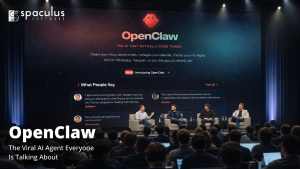
The story most people absorbed about OpenClaw was incomplete. What spread fastest was fear. Security headlines. Misconfiguration warnings. Claims that an AI agent had crossed a line it should never cross. That framing was convenient, dramatic, and ultimately shallow. OpenClaw did not become viral because it was reckless. It became viral because it made something visible that had been […]

AI isn’t just a product update at Microsoft. It’s a full rewrite of how software is built, sold, and used, starting at the infrastructure level. Under Satya Nadella’s leadership, Microsoft isn’t trying to win the AI race with louder models. It’s doing something sharper, turning AI into an invisible productivity layer that touches code, cloud, compute, […]

Meta is testing a new generative AI -based feature on its social media platform, Instagram. The newly rolled-out feature is Meta AI, which is the company’s general-purpose, AI-powered chatbot. Similar to Bing Chat, it can answer questions, write poetry, and generate images with a simple text prompt. Meta unveiled Meta AI in September 2023 and […]

The Concern Beneath the Hype AI is breaking new ground every month. From generative models coding software in seconds to tools predicting disease risks faster than doctors — we’re watching machines grow more capable by the day. But while the tech world cheers, Bill Gates is asking what few are willing to: Are we advancing […]
Walk into a tech expo right now and you’ll hear the buzz bouncing from booth to booth: generative AI, copilots, automation, machine learning at scale. Banks are eager to showcase their chatbots. Retailers talk up predictive engines. Even tiny consultancies have rebranded their old services with “AI-powered” stickers. It’s exciting, no doubt. But for anyone […]

LinkedIn — the social platform that targets the working world — has quietly started testing another way to boost its revenues, this time with a new service for small and medium businesses. Spaculus Software has learned and confirmed that it is working on a new LinkedIn Premium Company Page subscription, which — for fees that appear […]

Artificial Intelligence is evolving at a rapid pace, and Manus AI has entered the scene as a major player. While most businesses are familiar with OpenAI and emerging players like DeepSeek, Manus AI is positioning itself as a game-changer in digital transformation strategies. But how does it compare to industry giants, and more importantly, how […]
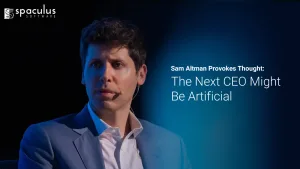
At a small dinner with reporters in San Francisco on August 15, 2025, Sam Altman was asked if he expected to still be OpenAI’s CEO a few years from now. His answer landed like a spark: maybe the CEO will be an AI. In the same conversation, he said investors are overexcited about AI and […]

The US government issued new rules Thursday requiring more caution and transparency from federal agencies using artificial intelligence, saying they are needed to protect the public as AI rapidly advances. But the new policy also has provisions to encourage AI innovation in government agencies when the technology can be used for the public good. The White […]

ChatGPT 5 is on its way, and it promises to be a game-changer. Sam Altman, CEO of OpenAI, recently made some significant statements about the upcoming release, shedding light on what we can expect. Let’s dive into the details with a comprehensive look at the features, advancements, and what this means for everyone. Key Highlights […]
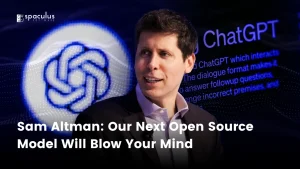
When Sam Altman makes a bold promise, the tech world listens. And his recent comment about OpenAI’s upcoming open-source release wasn’t just bold — it was a warning. “Our next open source model will blow your mind.” Not a benchmark. Not a press release. A straight-up statement of intent. This wasn’t marketing noise. It was a directional […]

Bay area startup Cognition today revealed Devin, a revolutionary AI software engineer that could transform the way we build software. Devin has achieved groundbreaking success on the SWE-bench coding benchmark, demonstrating its ability to execute complex tasks and even surpass top human engineers. Devin’s unique abilities set it apart from your typical coding assistant. With […]