WRITTEN BY

Hiren Mansuriya
Director & CTO
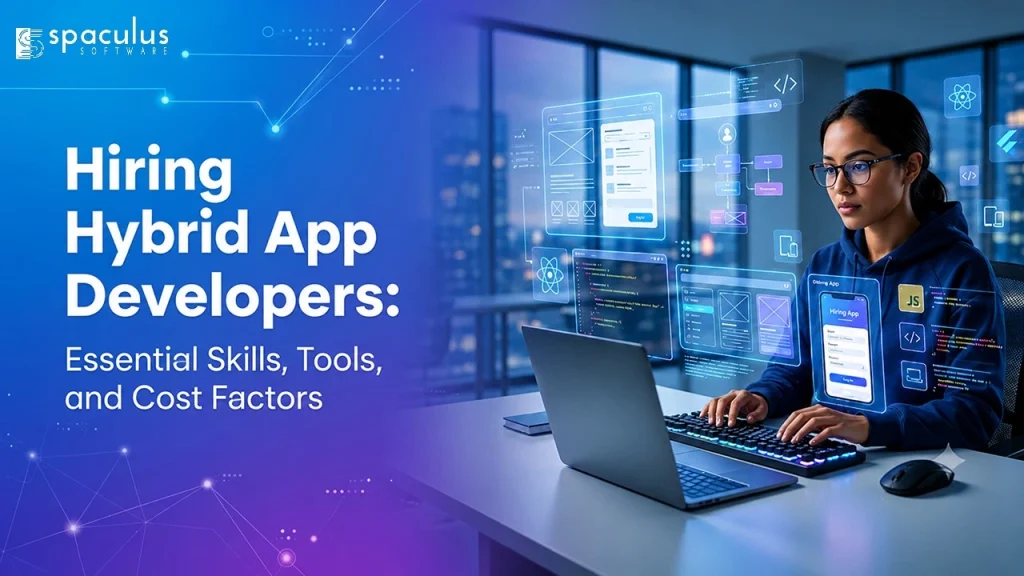
Hiring hybrid app developers helps businesses build mobile apps for both iOS and Android using one shared codebase.
This can reduce development time, lower cost, simplify maintenance, and help companies launch faster.
But hiring the right developer matters.
A good hybrid app developer does more than build app screens. They understand mobile performance, API integration, native device features, testing, app store deployment, and long-term maintenance.
In this guide, you will learn what hybrid app developers do, what skills to check, how much they cost, which tools they should know, and how to hire the right developer or team for your mobile app project.
A hybrid app developer builds mobile apps that work on both iOS and Android using a shared codebase.
Instead of building two separate apps from scratch, hybrid developers use frameworks like Flutter, React Native, Ionic, or Kotlin Multiplatform to reuse a large part of the code.
This helps businesses save time, control development cost, and manage one app more easily after launch.
A hybrid app developer usually works on:
A strong hybrid developer is not just a coder. They are also a product problem solver who understands how users interact with mobile apps in real life.
Businesses hire hybrid app developers because they want to launch faster, reduce development cost, and reach both iOS and Android users without building two separate native apps.
Hybrid app development is useful for:
For example, a startup may need to launch a booking app on both iOS and Android within a short timeline. A hybrid developer can build the shared app logic once, connect it with the backend, test it on both platforms, and prepare the app for release.
This makes hybrid app development a practical option for companies that want speed, cost control, and easier long-term maintenance.
A hybrid app developer should have strong framework knowledge, API integration experience, native feature understanding, performance optimization skills, testing discipline, and app deployment experience.
These skills decide whether the app feels smooth, stable, and ready for real users.
The first skill to check is experience with hybrid or cross-platform frameworks.
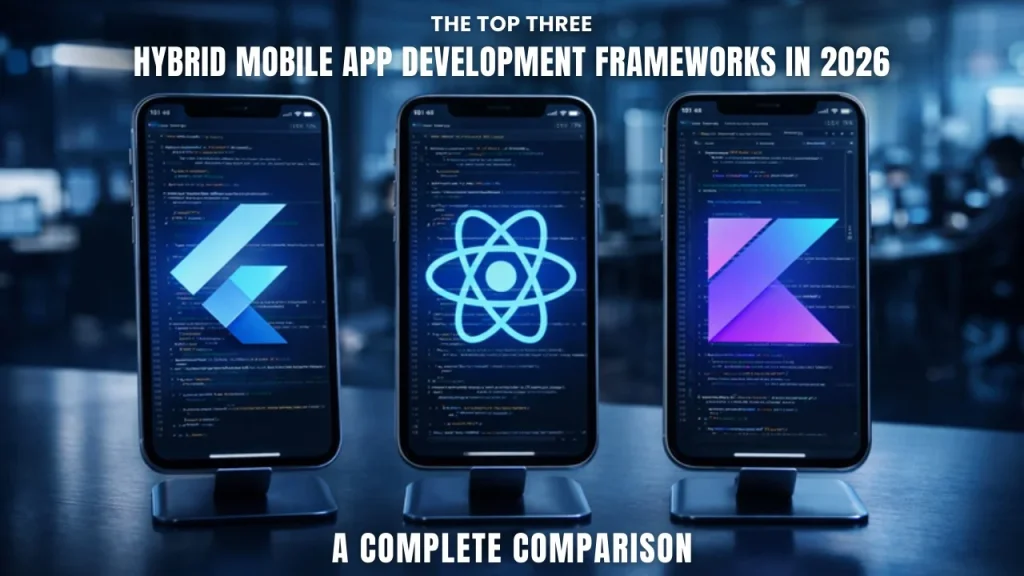
The most common frameworks are Flutter, React Native, Ionic, and Kotlin Multiplatform.
| Framework | Best For | What to Check |
|---|---|---|
| Flutter | MVPs, custom UI, fast development | Dart skills, widget knowledge, state management |
| React Native | SaaS apps, product apps, React-based teams | JavaScript, TypeScript, native bridge experience |
| Ionic | Web-first apps and internal business tools | Angular, React, Vue, Capacitor |
| Kotlin Multiplatform | Shared business logic with native UI | Kotlin skills, Android and iOS understanding |
Flutter is often a strong choice when the app needs a consistent custom interface across iOS and Android.
It is commonly used for MVPs, product apps, business apps, and apps that need fast UI development.
React Native works well when the company already uses React, JavaScript, or TypeScript.
It is a good fit for SaaS products, consumer apps, marketplaces, and business applications.
Ionic can work well for web-first teams and simpler mobile apps.
It is often used for internal tools, dashboards, and mobile apps that do not need heavy native performance.
Kotlin Multiplatform is useful when a business wants to share business logic while still keeping native user interfaces.
It is a good option for apps where platform-specific experience matters.
A good hybrid app developer should know at least one main mobile development language well.
Important languages include:
TypeScript is especially useful for larger business apps because it helps reduce common coding errors and makes the app easier to maintain.
For Flutter projects, Dart is required.
For React Native projects, JavaScript and TypeScript are important.
For Kotlin Multiplatform projects, Kotlin knowledge is essential.
Most mobile apps depend on backend systems.
A hybrid app developer should know how to connect the app with APIs safely and cleanly.
They should understand:
Poor API integration can create slow screens, broken sessions, duplicate data, failed payments, and a poor user experience.
That is why backend communication is one of the most important skills to check before hiring a hybrid app developer.
Hybrid apps still need native mobile features.
A good developer should know how to connect shared app code with device-level features.
This may include:
Many hiring mistakes happen when a developer can build screens but struggles with native integrations.
This becomes a problem when the app needs Apple Pay, Google Pay, health data, location tracking, or custom hardware features.
Hybrid apps can perform well, but only when they are built properly.
A strong developer should know how to:
Performance should not be treated as a final step.
It should be part of the development process from the beginning.
A good hybrid app developer should know how to prepare and submit apps to both the Apple App Store and Google Play.
They should understand:
This experience saves time near launch.
A developer who has already shipped apps can spot approval risks earlier and avoid last-minute delays.
A strong hybrid app developer should know the tools used to build, test, ship, monitor, and maintain mobile apps.
| Category | Tools |
|---|---|
| Frameworks | Flutter, React Native, Ionic, Kotlin Multiplatform, Expo, Capacitor |
| Editors | VS Code, Android Studio, Xcode, IntelliJ IDEA |
| Testing | Jest, Detox, Appium, Flutter Test, Firebase Test Lab, BrowserStack |
| CI/CD | GitHub Actions, Bitrise, Codemagic, CircleCI, Fastlane |
| Version Control | Git, GitHub, GitLab, Bitbucket |
| Design Handoff | Figma, Zeplin, Adobe XD |
| Monitoring | Firebase Crashlytics, Sentry, Google Analytics, Mixpanel |
| AI Tools | GitHub Copilot, Cursor, ChatGPT, Claude |
AI tools can help developers write boilerplate code, create tests, and debug faster.
But AI tools do not replace technical judgment.
A good developer still needs to review code, protect security, and test the app properly on real devices.
The cost to hire a hybrid app developer usually ranges from about $20 to $150+ per hour.
The final cost depends on:
A simple mobile app costs less than a complex app with payments, chat, maps, video calls, offline access, or advanced backend workflows.
| Region | Typical Hourly Range |
|---|---|
| United States | $70 to $150+ |
| United Kingdom | $60 to $130 |
| Eastern Europe | $35 to $75 |
| India | $20 to $50 |
| Philippines | $20 to $45 |
Many companies in the US, UK, Canada, Australia, and Europe hire offshore hybrid app developers to reduce development cost while still getting access to experienced Flutter, React Native, backend, and QA talent.
India is often a practical choice for companies that want skilled mobile developers at a lower cost than local hiring in the US or UK.
| Experience Level | Typical Hourly Range | Best For |
|---|---|---|
| Junior | $15 to $35 | Small tasks, bug fixes, simple screens |
| Mid-level | $30 to $70 | MVPs, feature development, API integration |
| Senior | $60 to $150+ | Architecture, complex apps, performance, launch planning |
Do not hire a junior developer to own a complex mobile app alone.
It may look cheaper at first, but poor architecture and rework can become expensive later.
The complexity of the app has a major impact on development cost.
A simple content app or booking app will usually cost less than a real-time marketplace, fintech app, healthcare app, or logistics platform.
Costs increase when the app needs:
The more complex the app, the more important it becomes to hire experienced developers instead of choosing only the lowest hourly rate.
The best hiring model depends on your app complexity, budget, timeline, and long-term product plans.
| Hiring Option | Best For | Main Benefit | Risk |
|---|---|---|---|
| Freelancer | Small tasks or MVP support | Flexible cost | Quality can vary |
| In-house developer | Long-term product companies | More control | Higher fixed cost |
| Offshore developer | Cost-efficient development | Lower hourly cost | Needs clear communication |
| Dedicated team | Growing products | Full development support | Requires project management |
A freelancer can work well for small tasks, bug fixes, or simple MVP support.
This model is flexible, but quality and availability can vary.
An in-house developer is useful when mobile development is a core part of your business.
This gives more control, but it also creates higher fixed costs.
Offshore developers can help businesses reduce development costs while accessing skilled talent.
This model works best when the project has clear requirements, regular communication, and proper project management.
A dedicated team is often the best fit when the app needs design, development, backend integration, QA, deployment, and maintenance support.
This model gives businesses more stability than hiring one freelancer for a complex app.
You should hire a dedicated hybrid app development team when your app needs more than basic screen development.
This model is useful when you need:
For example, if you are building a SaaS product, healthcare app, booking platform, marketplace, or internal business tool, a dedicated team can manage the full product flow instead of only writing mobile screens.
At Spaculus, businesses can work with offshore developers for hybrid app development, backend integration, QA testing, deployment, and long-term product support.
To hire the right hybrid app developer, review real shipped apps, check technical skills, test code quality, and start with a short paid trial.
Do not hire only based on hourly rate.
A low-cost developer may become expensive if they create poor code, miss platform rules, or fail to handle performance and deployment properly.
Ask the developer to show apps they personally worked on.
Check:
Do not accept “team project” as proof unless the developer can clearly explain their role.
A good test should be small and realistic.
For example, ask the developer to:
Avoid unpaid tests that take several days.
A short paid task gives a better hiring signal and is more respectful.
Ask a senior developer to review the code before making a long-term decision.
Check for:
Bad code can look fine on the screen but become difficult to maintain later.
A 1 to 2 week paid trial can reveal more than multiple interviews.
During the trial, check:
This helps you understand how the developer works in a real project environment.
The biggest mistake is hiring only based on the lowest hourly rate.
A lower rate can look attractive at first, but it can become expensive if the developer creates poor architecture, weak API logic, bad performance, or deployment issues.
Cheap development can lead to slow delivery, missed details, and expensive rework.
Instead of choosing the lowest price, look for the right balance of skill, communication, experience, and cost.
iOS and Android have different rules, permissions, design patterns, and store requirements.
A good hybrid app developer understands these differences and does not treat both platforms exactly the same.
Poor code can become a long-term maintenance problem.
Always review code quality before making a long-term hiring decision.
A developer who has never submitted apps to the stores may struggle near launch.
This can delay your release and create approval problems.
Interviews do not always show how someone works inside a real project.
A short paid trial gives a much better view of communication, ownership, and technical skill.
Many mobile app problems come from weak API handling, not the user interface.
Make sure the developer understands backend communication, authentication, errors, and data handling.
Apps need regular updates for OS changes, SDK updates, store policies, security fixes, and user feedback.
Maintenance should be part of the plan from the beginning.
Flutter, React Native, Ionic, and Kotlin Multiplatform are not the same.
The right framework depends on your product, team, budget, timeline, and long-term roadmap.
Hiring hybrid app developers is not just about finding someone who knows Flutter or React Native.
It is about finding a developer or team that can build, test, launch, and maintain a reliable mobile app across iOS and Android.
The right hire can reduce time-to-market, control development cost, and give your product a stable mobile foundation.
The wrong hire can create delays, rework, poor performance, and technical debt.
Before hiring, check real shipped apps, review code quality, test practical skills, and start with a short paid trial.
If you are planning a hybrid mobile app, Spaculus Software can help you choose the right framework, estimate development effort, and build a dedicated development team around your product roadmap.
Hybrid App DevelopmentHiren, a visionary CTO, drives innovation, delivering 300+ successful web/mobile apps. Leading a 70+ tech team, Hiren excels in DevOps, cloud solutions, and more. With a top-performing IT Engineering background, Hiren ensures on-time, cost-effective projects, transforming businesses with strategic expertise.