WRITTEN BY

Hiren Mansuriya
Director & CTO
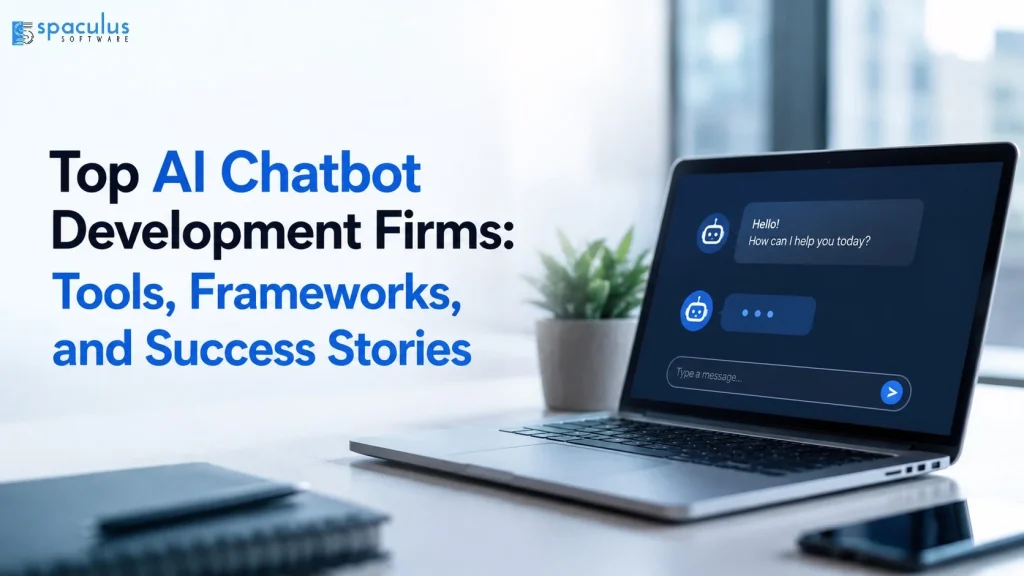
AI chatbots have changed a lot in the last few years.
A few years ago, most chatbots were simple rule-based systems. They followed a fixed script, answered basic questions, and passed the user to a human when the conversation became complex.
Today, businesses expect much more.
Modern AI chatbots can read documents, connect with APIs, understand context, take actions, and support customers across websites, mobile apps, WhatsApp, CRMs, and internal business tools. In many cases, they are no longer just chatbots. They are AI agents with a chat interface.
That is why choosing the right AI chatbot development firm matters.
A good development partner does more than connect your app to an LLM. They think about architecture, data quality, security, evaluation, cost control, user experience, and long-term maintenance.
This guide explains what to look for when choosing an AI chatbot development company, which tools and frameworks matter, what real success looks like, and what red flags to avoid.
An AI chatbot development firm helps businesses design, build, launch, and maintain conversational AI systems.
These systems may be used for:
The best firms do not build every chatbot the same way.
A simple FAQ bot may only need a clean knowledge base and retrieval system. A healthcare chatbot may need strict compliance, human handoff, and refusal rules. A retail chatbot may need direct integration with product inventory, payment systems, and order tracking.
The right firm understands the difference.
Traditional chatbots were usually built around decision trees, intents, and predefined answers.
For example, a user might ask:
“Where is my order?”
The chatbot would look for the intent “order tracking” and ask for an order number.
That approach still works for simple use cases. But it becomes weak when users ask complex questions, provide unclear information, or need the chatbot to complete a task across multiple systems.
Modern AI chatbots are different.
They can:
This is where AI agents come in.
An AI agent can do more than answer. It can act.
For example, it can check appointment availability, create a support ticket, update a CRM record, process a refund request, or guide an employee through an internal policy.
That is why businesses should not choose a vendor only because they say they offer “GPT integration.” That is not enough anymore.
A serious chatbot development firm should be comfortable with more than one model, framework, and deployment approach.
Here are the main technology areas to understand.
Large language models are the intelligence layer behind modern AI chatbots.
Common options include:
OpenAI models are widely used for general-purpose chatbot development, function calling, reasoning, and production AI applications. They also have a strong developer ecosystem.
Claude models are often used for long-context tasks, careful reasoning, document-heavy workflows, and regulated industries where response quality and instruction-following are important.
Gemini can be useful when the business already uses Google Cloud or when the chatbot needs strong multimodal capabilities, such as working with text, images, audio, or video.
Models such as Llama, Mistral, and Qwen can be useful for companies that need more control, lower cost at scale, or private deployments.
A strong chatbot firm should be model-agnostic. That means they should choose the right model for your use case instead of forcing every project into one provider.
Orchestration frameworks control how the chatbot thinks, routes tasks, calls tools, and manages multi-step workflows.
Common options include:
LangChain is popular for prototyping AI applications. It is flexible and widely known, but production systems often need careful architecture to avoid unnecessary complexity.
LangGraph is useful for building multi-step agents with clear state management. It is often a better fit when the chatbot needs to follow a controlled workflow.
CrewAI is used for multi-agent workflows where different agents handle different responsibilities. It can be useful, but it should be used carefully and only when multi-agent design truly adds value.
Semantic Kernel is often used in Microsoft and enterprise environments, especially when the business already works with .NET, Azure, or Microsoft tools.
The framework matters, but the architecture matters more. A good firm should be able to explain why a specific framework is suitable for your project.
RAG stands for Retrieval-Augmented Generation.
In simple terms, RAG allows the chatbot to search your company data before answering. This helps reduce hallucinations and makes answers more relevant to your business.
A RAG chatbot may search:
Common vector databases and retrieval tools include:
However, the vector database is only one part of the system.
The real quality comes from:
If a vendor says, “We will add your documents to a vector database,” ask them how they measure whether the chatbot retrieves the right information.
That answer will tell you a lot.
A chatbot is useful only when it works where your users already are.
Common channels include:
Common tools include:
The best firms do not just build the chatbot interface. They connect it properly with your business systems.
When comparing AI chatbot development companies, do not judge only by portfolio design or sales presentation.
Use these practical checks.
A real case study should explain:
Be careful with vague claims such as:
“We improved customer experience using AI.”
That does not say much.
A stronger case study would say:
“We built a RAG-based support chatbot over 20,000 help articles, integrated it with Zendesk, reduced repetitive support tickets, and added human handoff for low-confidence answers.”
Specifics matter.
Prompt writing is only one part of chatbot development.
Ask the firm:
If the answers are vague, the team may not have enough production experience.
For document-based chatbots, RAG quality is critical.
Ask:
Many chatbot failures happen because retrieval is weak, not because the LLM is bad.
Evaluation is one of the biggest differences between a demo and a production chatbot.
A good firm should test the chatbot using a set of expected questions and answers before every major change.
They may use tools such as:
The goal is simple: make sure the chatbot does not get worse after a prompt, model, or data change.
If a company only says, “We manually test it,” that is not enough for serious business use.
Security requirements depend on your industry.
For healthcare, HIPAA may matter.
For payments, PCI-DSS may matter.
For European users, GDPR may matter.
For enterprise clients, private cloud or on-premise deployment may matter.
Ask the firm:
A chatbot may look simple on the front end, but it can touch sensitive business data behind the scenes.
An AI chatbot is not a one-time project.
After launch, you still need:
User behavior also changes over time. The questions people ask in month one may be different from the questions they ask in month six.
A good firm should offer a clear post-launch support plan.
Successful chatbot projects usually have one thing in common: clear scope.
They are not built around the idea of “let’s add AI.”
They are built around a specific business problem.
A healthcare provider may need a chatbot that answers patient questions, explains general information, and routes urgent cases to a human team.
For this type of system, the chatbot should not act like a doctor. It should be careful, conservative, and designed with strict escalation rules.
Important features may include:
In healthcare, success is not just about automation. It is about safety and trust.
A retail brand may want a WhatsApp chatbot that helps customers find products, check availability, recover abandoned carts, and track orders.
This type of chatbot may not need a complex RAG system if the product data already exists in a structured database.
Important features may include:
In retail, speed and integration quality often matter more than long-form answers.
A company may want an internal chatbot that answers employee questions from Confluence, Jira, SharePoint, HR policies, and internal documents.
Important features may include:
For internal tools, the chatbot must respect permissions. Employees should only see information they are allowed to access.
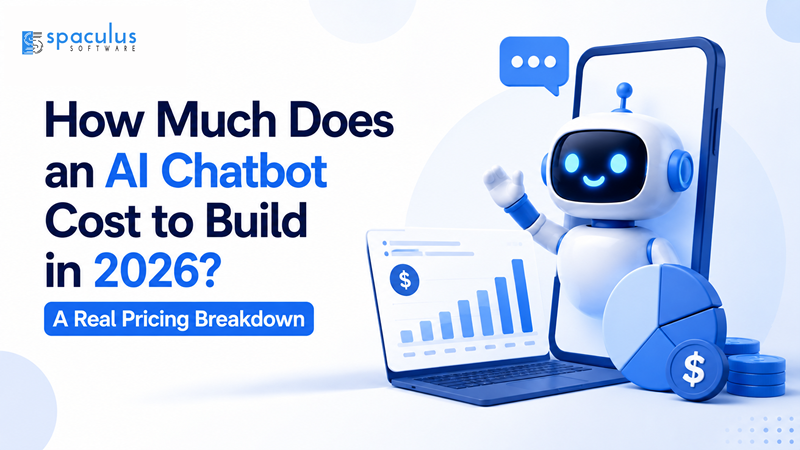
The cost of chatbot development depends on complexity.
A simple chatbot may cost much less than a multi-channel AI agent connected to several business systems.
Here is a practical way to think about cost.
Best for FAQs, basic website support, and simple lead capture.
Typical features:
Estimated range: $10,000 to $40,000
Best for growing businesses that need integrations and better automation.
Typical features:
Estimated range: $40,000 to $120,000
Best for enterprise workflows, regulated industries, and complex automation.
Typical features:
Estimated range: $120,000 to $300,000+
Development cost is only one part of the budget.
You also need to plan for:
A busy chatbot can generate significant monthly operating costs if it is not designed properly.
Cost-saving methods may include:
A good chatbot development firm should discuss operating cost before development starts.
Be careful if a vendor:
A chatbot that works in a demo may fail in production if these areas are ignored.
Here is a simple framework.
Look for firms that have worked on projects similar to yours.
A healthcare chatbot, retail chatbot, fintech chatbot, and internal HR chatbot all need different thinking.
Review their blog, case studies, and technical explanations.
Strong firms usually talk about:
Weak firms usually talk only about benefits and generic automation.
Before hiring, ask how they would design your chatbot.
You do not need a full technical blueprint, but you should expect clear thinking.
They should be able to explain:
A fixed-price model may work for a well-defined chatbot.
A dedicated team or retainer model may work better if the product will evolve over time.
For AI projects, requirements often change after the first few user tests. Choose a model that gives you enough flexibility.
Choosing an AI Chatbot Development firm is not just about finding someone who can build a chat interface.
It is about choosing a team that understands AI architecture, business workflows, user experience, security, cost, and long-term support.
The best chatbot firms ask hard questions before they build. They want to understand your data, your users, your risks, your systems, and your success metrics.
That is the difference between a chatbot that looks impressive in a demo and one that actually works in production.
At Spaculus, we help businesses build custom AI chatbots and AI agents for real business workflows, including RAG systems, API-connected agents, customer support automation, internal helpdesk bots, and industry-specific AI solutions.
If you are planning an AI chatbot project, start by defining the business problem clearly. The right technology choice becomes much easier after that.
AI Chatbot DevelopmentHiren, a visionary CTO, drives innovation, delivering 300+ successful web/mobile apps. Leading a 70+ tech team, Hiren excels in DevOps, cloud solutions, and more. With a top-performing IT Engineering background, Hiren ensures on-time, cost-effective projects, transforming businesses with strategic expertise.