WRITTEN BY

Hiren Mansuriya
Director & CTO
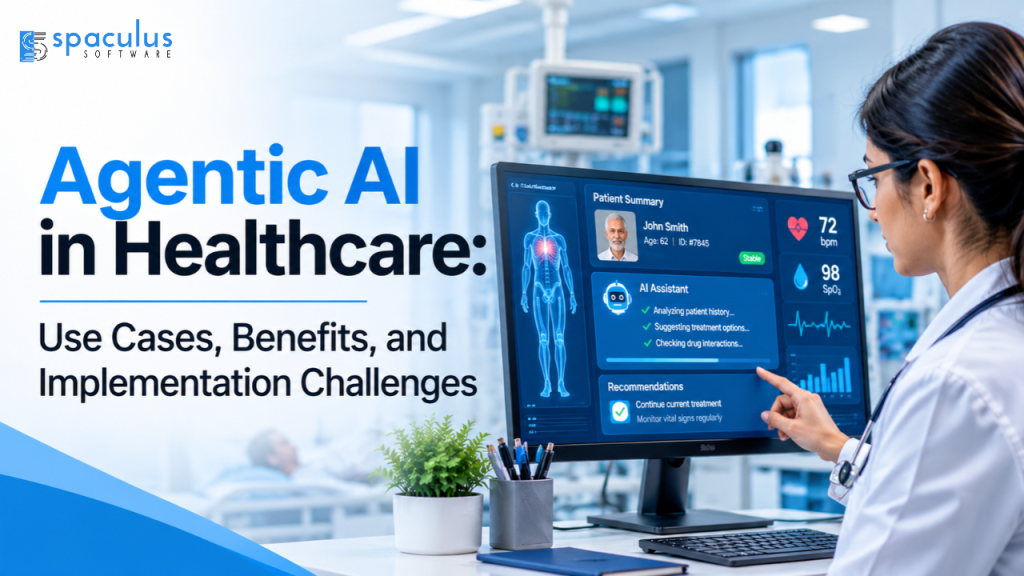
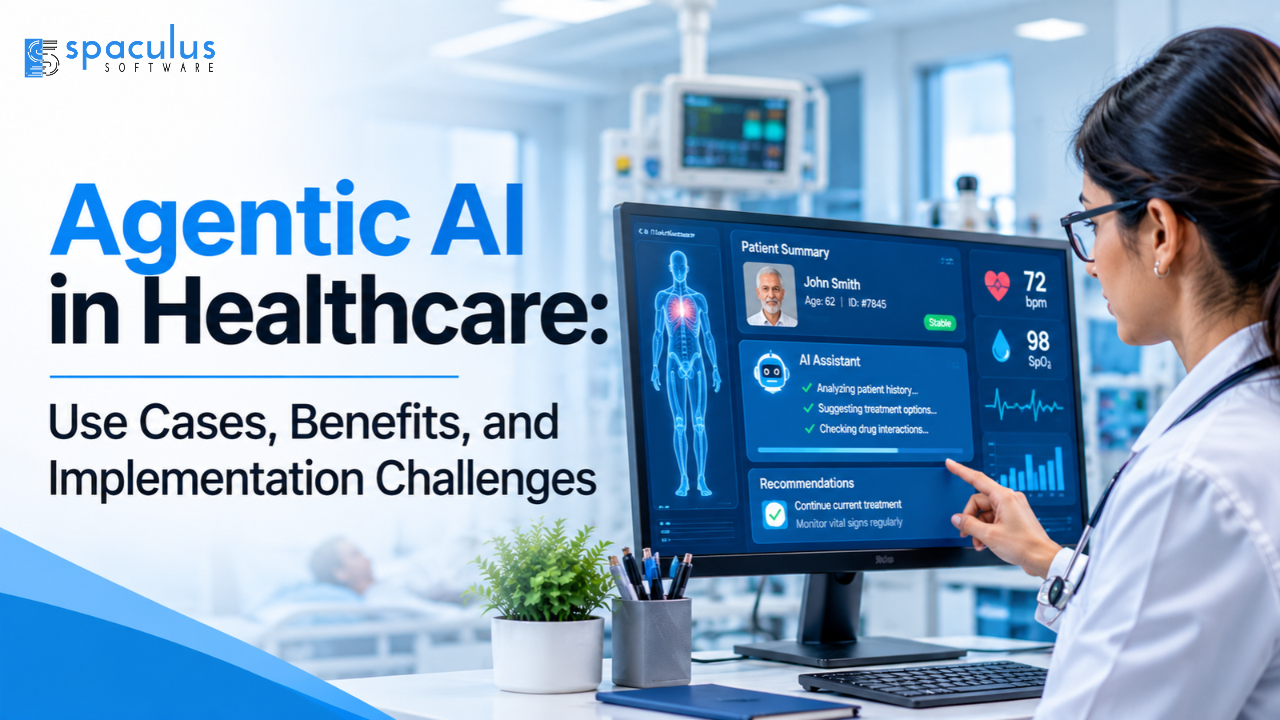
Healthcare organizations already use AI to summarize records, answer questions and identify patterns. Agentic AI goes further. It can plan tasks, retrieve information, call approved tools and move a workflow toward completion.
For example, an agent could check prior-authorization requirements, collect supporting records, identify missing information and prepare a submission for staff approval.
That ability creates value, but it also changes the risk. A chatbot can produce a wrong answer. An agent can turn a wrong answer into a real action that changes a record, exposes protected information or delays care.
The goal should not be maximum autonomy. Healthcare organizations need controlled autonomy based on the consequences of each action.
Agentic AI can support prior authorization, referral coordination, appointment management, clinical documentation and hospital operations.
Safe implementation requires a defined action boundary, limited system access, human approval for high-risk decisions, reliable healthcare-data integration and continuous monitoring. Clinical judgment and consequential actions should remain under qualified human control.
Agentic AI refers to systems that can pursue a goal through several connected steps. An agent may interpret a request, build a plan, retrieve records, use an API, update a workflow and check whether the task was completed.
The defining difference is action.
A healthcare chatbot may explain how to prepare for an appointment. An agent may find an available specialist, verify referral requirements, offer appointment times, schedule the visit and send approved instructions.
| System | Main function | Healthcare example | Appropriate control |
| Chatbot | Answers a question | Responds to approved patient FAQs | Content validation and escalation |
| AI copilot | Assists a professional | Drafts a clinical note | Human reviews every output |
| AI agent | Completes multistep tasks | Prepares a prior-authorization request | Permissions, approval gates, logs and monitoring |
Not every workflow needs an agent. If the task only requires an answer, summary or recommendation, a chatbot or copilot may be safer and easier to manage.
The most practical starting points are repetitive workflows with clear rules and limited clinical consequences.
An agent can check coverage requirements, retrieve supporting records, find missing documentation and prepare a request for review.
The CMS Interoperability and Prior Authorization Final Rule requires affected payers to implement FHIR-based APIs for several data-exchange and prior-authorization workflows. These interfaces can provide a structured route for approved automation.
The agent should not invent missing clinical evidence or automatically submit an uncertain request. Its role is to assemble information and reduce administrative coordination.
Agents can locate providers, compare appointment availability, track referrals and request missing records. They can also send approved preparation instructions or remind staff when a result has not been reviewed.
Urgent symptoms, medication questions and conflicting clinical instructions must be escalated. Faster automation should never become faster unsafe advice.
An agent may collect encounter details, prepare a draft summary and connect statements to their source records. The clinician remains responsible for checking, editing and signing the final documentation.
Permission-aware retrieval is essential. A user should only receive information they are authorized to access for a legitimate purpose.
Healthcare agents can monitor claim status, identify missing documentation, detect coding inconsistencies and prepare denial-response materials.
Financial corrections, claim submissions and appeals should pass through defined validation and approval rules.
Agents may help monitor bed availability, supplies, maintenance requests and staffing signals. These operational cases can create value without giving the system authority over diagnosis or treatment.
Staff should still approve decisions that affect patient placement, resource allocation or clinical capacity.
Traditional AI may create a useful answer while leaving employees to complete the workflow. An agent can coordinate approved steps across several systems.
The 2025 AMA Prior Authorization Physician Survey, published in 2026, found that practices complete an average of 40 prior authorizations per physician each week. Physicians and their staff spend about 13 hours per week completing them, while 40% of practices have staff who work exclusively on prior authorization.
These figures do not prove that an AI agent will save 13 hours. They show where administrative workload exists and what an implementation should measure.
A healthcare organization could track:
An agent is valuable only when it reduces work without creating new safety, review or compliance problems.
A system designed to collect records should not automatically receive permission to change treatment information or submit claims.
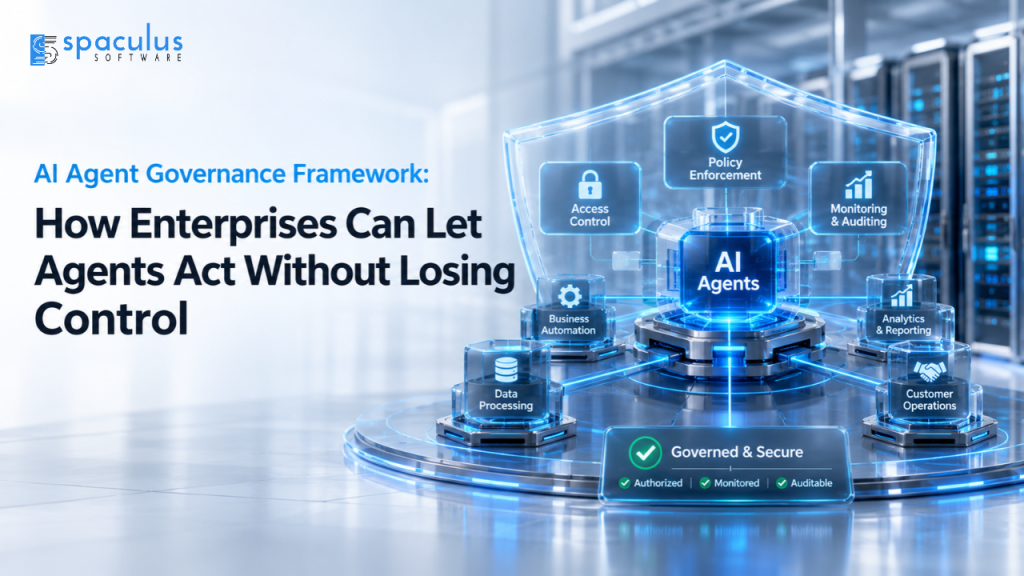
A practical model is to separate actions into three levels: read, recommend and act. Controls should become stronger as an action becomes harder to reverse.
Before development, document an action envelope covering the agent’s purpose, data access, tools, prohibited actions, approval rules and shutdown process. The Spaculus AI agent governance framework explains how these boundaries can be enforced at runtime.
Healthcare agents may connect to EHRs, payer systems, scheduling platforms and communication tools.
The HHS summary of the HIPAA Security Rule explains that covered entities and business associates must protect the confidentiality, integrity and availability of electronic protected health information. This responsibility applies to the full system, not only the AI model.
Access rules, third-party vendors, prompts, logs, retained data and system integrations must all be reviewed.
A malicious instruction can appear inside an email, document, website or tool response. If the agent treats that content as an instruction, it may reveal information or perform an unauthorized action.
The OWASP AI Agent Security Cheat Sheet recommends limited tool permissions, input validation, human approval for high-impact operations and testing for agent-specific failure modes.
Prompts alone cannot enforce security. Permission checks and business rules must remain outside the model.
Healthcare information may be spread across structured FHIR resources, free-text notes, scanned records and older systems. Records can also be missing, duplicated or inconsistent.
Agents need source attribution, identity matching, data-quality checks and a clear response when required information is unavailable. “I cannot complete this safely” must be an acceptable outcome.
A workflow that schedules an appointment does not carry the same regulatory considerations as software influencing diagnosis or treatment.
The FDA regulates certain AI-enabled software based on its intended use and whether it meets the definition of a medical device. The agency reported that more than 1,600 AI-enabled medical devices had been authorized as of September 2026.
The HTI-1 Final Rule also establishes transparency requirements for predictive algorithms included in certified health IT. Clinical, security, legal and regulatory specialists should therefore review the intended use before development begins.
Start with one workflow that has measurable administrative value and limited clinical consequences.
Map every system, data source, decision, exception and responsible person. Then define what the agent may read, recommend, change or never do.
Test the complete workflow, not only the model response. Scenarios should include missing records, conflicting data, revoked permissions, unavailable APIs, malicious document instructions, rejected approvals and repeated actions.
Launch with limited users and permissions. Expand the agent’s authority only after monitoring shows reliable behavior.
The NIST AI Risk Management Framework provides a useful structure for governing and evaluating AI risks throughout the system lifecycle.
Healthcare organizations should also prepare for failures. The Playbook for AI Clinical Resilience was published by the Health Sector Coordinating Council Cybersecurity Working Group in October 2026. It helps clinical, governance, technical and compliance teams prepare for threats affecting AI-supported clinical operations.
Agentic healthcare systems require more than an LLM. They need secure integrations, permission-aware retrieval, evaluation, approval workflows and production monitoring.
Spaculus Software’s healthcare development services support AI-enabled healthcare platforms and connected operational workflows. Organizations can also hire AI engineers for agent development, RAG, system integration and evaluation.
The objective is to automate the work surrounding healthcare decisions without removing the accountability required for safe care.
Agentic AI uses models, tools and workflow logic to complete multistep healthcare tasks. It may retrieve records, call approved APIs and move a task toward completion.
General-purpose agents should not independently make high-risk clinical decisions. The permitted autonomy depends on intended use, validation, regulation and qualified human oversight.
Referral tracking, document collection, appointment coordination and prior-authorization preparation are practical starting points because their actions can be clearly bounded and reviewed.
Traditional automation follows predetermined rules. An agent can interpret context and select among approved steps, which makes it more flexible but also harder to control.
No. Compliance depends on the complete system, including data flows, vendors, access controls, logs, retention, agreements and operational safeguards.
Hire AI EngineersHiren, a visionary CTO, drives innovation, delivering 300+ successful web/mobile apps. Leading a 70+ tech team, Hiren excels in DevOps, cloud solutions, and more. With a top-performing IT Engineering background, Hiren ensures on-time, cost-effective projects, transforming businesses with strategic expertise.