WRITTEN BY

Hiren Mansuriya
Director & CTO
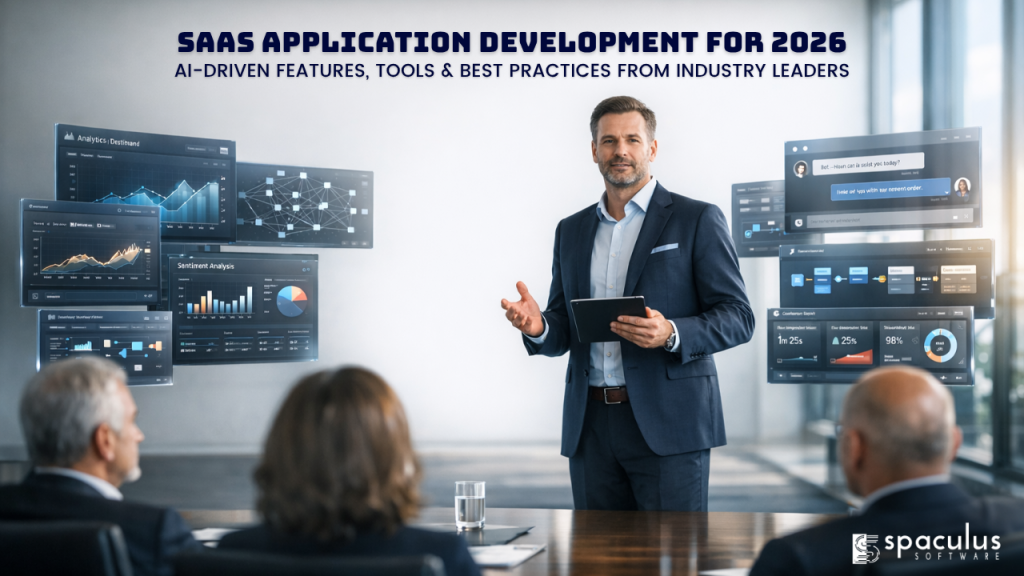
Most SaaS products built in 2024 are already falling behind. Not because the code is bad but because expectations have changed. Users today don’t just want software that works. They want software that thinks, adapts, and improves with every interaction.
That’s the new baseline in 2026 and it’s raising the bar for every team building in the cloud.
The companies winning right now made one smart decision early: they partnered with a SaaS Application Development Company that understands both technical depth and product thinking. This article breaks down exactly what that looks like from AI features and tools to the practices that separate scalable SaaS products from the ones that quietly fail after launch.
SaaS has always been about convenience and scalability. But 2026 marks the shift where AI is no longer optional it’s foundational.
According to Gartner, over 70% of SaaS applications launched in 2025–2026 include at least one embedded AI capability. The days of shipping a clean dashboard and calling it complete are over.
Users now expect:
Most SaaS teams think adding AI later is fine. It’s not. By the time you “plan for AI,” your competitors have already built it into their core experience.
Cloud-native architecture has also matured. Kubernetes, serverless computing, and multi-region deployments are no longer advanced setups they’re expected. If your SaaS product isn’t built on a scalable foundation, your churn rate will reflect it before your analytics do.
At the same time, competition is sharper than ever. Vertical SaaS products are dominating industries like healthcare, fintech, logistics, and legal. Generic platforms are losing relevance fast.
The right AI features depend on your product, but top-performing SaaS platforms are already delivering on these essentials:
Machine learning models that identify trends, risks, and opportunities before users even ask. Tools like Amazon SageMaker and Google Vertex AI make this achievable without building models from scratch.
Dynamic onboarding tailored to user behavior, role, and intent. SaaS products using personalized onboarding see significantly higher activation rates.
Let users automate workflows using natural language. Integrations with APIs like OpenAI or Anthropic make this accessible even without a full ML team.
Search is evolving into conversation. Users now expect to type queries like:
“Show me last quarter’s revenue by region”
—and get instant, visual answers.
Beyond UI preferences, personalization now includes:
These features aren’t futuristic they’re already standard in competitive SaaS products.
Choosing the right tech stack is one of the most critical decisions you’ll make.
The wrong tech stack doesn’t just slow development it quietly limits what your product can become.
Build every feature as an API first. This ensures:
GitHub Actions, GitLab CI, and CircleCI enable:
Stripe remains the go-to solution for subscriptions, usage-based billing, and global payments.
OpenAI, Anthropic, and Hugging Face provide powerful capabilities without requiring in-house model training.
Building a scalable SaaS product requires more than clean code. It requires disciplined decisions from day one.
Single-tenant architecture becomes a bottleneck fast. Build with scalability in mind from the start.
SOC 2, GDPR, and compliance requirements should be built in not added later.
Scaling isn’t something you fix later. It’s something you design for early.
Most scaling problems aren’t traffic issues they’re architecture decisions made too early and never revisited.
Use tools like Mixpanel, Hotjar, and Amplitude to understand user behavior and guide product decisions.
Make your product integration-ready from day one with:
Use tools like Datadog, New Relic, or Prometheus to monitor performance and catch issues before users do.
Not every development partner is equipped for modern SaaS demands.
Here’s what to evaluate:
Look for real-world implementations not theoretical knowledge.
Ensure they understand:
The real work begins after launch. Continuous improvement is key.
Transparent workflows, frequent updates, and collaboration are non-negotiable.
Critical for industries like healthcare, fintech, and enterprise SaaS.
If you’re serious about building a SaaS product that can compete in 2026, the decisions you make right now matter more than anything you’ll do later.
Working with the right development partner can help you get your architecture, AI strategy, and product foundation right from day one not after costly rebuilds.
The teams that win don’t move faster. They start smarter.
SaaS in 2026 is no longer about shipping features. It’s about building products that learn, adapt, and scale without breaking.
The gap between average and high-performing SaaS products is growing fast and it comes down to early decisions.
The right SaaS Application Development Company doesn’t just execute your vision. It challenges it, strengthens it, and helps you build something that lasts.
If you’re building for the future, don’t settle for short-term thinking.
SAAS Application DevelopmentHiren, a visionary CTO, drives innovation, delivering 300+ successful web/mobile apps. Leading a 70+ tech team, Hiren excels in DevOps, cloud solutions, and more. With a top-performing IT Engineering background, Hiren ensures on-time, cost-effective projects, transforming businesses with strategic expertise.