WRITTEN BY

Hiren Mansuriya
Director & CTO
I’ve hired, fired, replaced, and restructured MEAN teams across startups and enterprises. I’ve watched technically competent developers sink projects, and I’ve seen “average” engineers quietly save companies by making boring, unfashionable decisions. This guide exists because the standard advice fails under real pressure: deadlines slip, budgets harden, incentives warp behavior, and people stop telling the truth.
I will not explain what MongoDB, Express, Angular, or Node.js are. If that knowledge is missing, this article is not for you and that is a feature, not a bug.
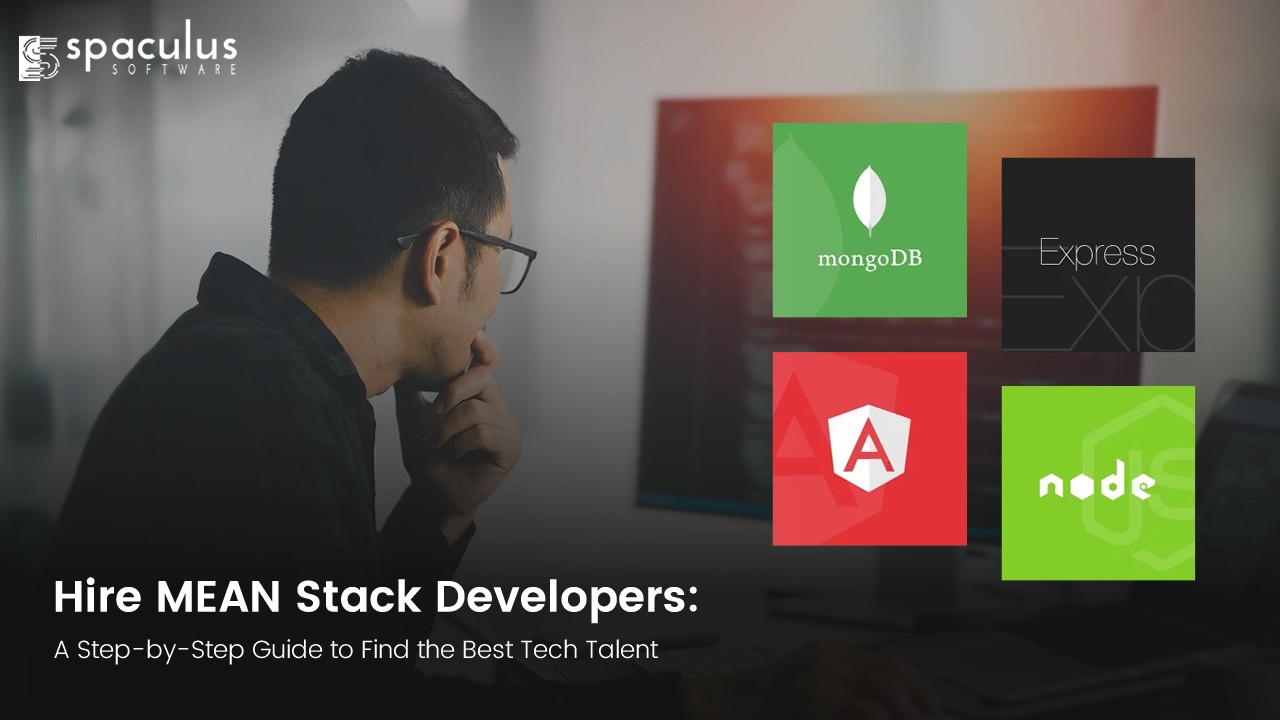
Direct answer: If you start by hiring for the MEAN stack, you have already narrowed the problem incorrectly.
The industry treats “stack selection” as a neutral technical choice. In practice, it is an economic and organizational commitment that shapes failure modes for years. I’ve seen teams hire excellent MEAN developers only to discover the real bottleneck was data modeling discipline, product volatility, or internal API ownership not JavaScript fluency.
Boundary conditions and tradeoffs:
MEAN makes sense when rapid schema evolution and front–back symmetry are core needs. It fails quietly when your domain stabilizes faster than your organization does. In those cases, the flexibility you paid for becomes a liability: inconsistent data contracts, accidental complexity, and a codebase that only its original authors can navigate.
Misconception exposed: “The stack determines velocity.”
Velocity is determined by decision latency and error recovery, not tooling.
Direct answer: The most important hiring signal is not skill depth but the type of mistakes the developer habitually makes.
After enough failed hires, you notice a pattern: every engineer has a default failure mode. Some over-abstract early. Some hard-code business logic. Some avoid confrontation and let bad decisions fossilize. Résumés don’t reveal this. Interviews rarely do either.
Original mental model – The Failure Surface:
Instead of asking “Is this developer good?”, map where they fail under pressure:
MEAN stacks amplify these traits because JavaScript’s permissiveness hides architectural debt until it compounds.
Why standard advice fails:
Whiteboard exercises reward idealized thinking. Production systems punish it.
Direct answer: Ask how long it took them to realize a past MEAN decision was wrong—and what they did next.
Years of experience correlate weakly with judgment. Time-to-regret correlates strongly. Senior developers who recognize bad calls quickly are rare and invaluable.
Falsifiable claim:
Given two MEAN developers of equal technical skill, the one who can articulate three painful architectural reversals will outperform the one with a “clean” history over a three-year horizon.
This can be proven wrong. I’ve never seen it fail.
Constraint:
This only works if the organization allows reversals. If your culture punishes course correction, hire conservative maintainers instead.
Direct answer: MEAN developers are not fungible units; they cluster into asymmetrical specialists pretending to be generalists.
The stack invites this confusion. Node and Angular sit on the same language, but they reward different instincts. Back-end MEAN work punishes sloppiness slowly and catastrophically. Front-end MEAN work punishes it immediately and visibly.
Misconception exposed: “One strong MEAN developer can cover everything.”
This is true only for trivial systems or short-lived ones.
Economic failure mode:
You underhire, overtrust, and discover the gap when rewrites are no longer affordable.
Direct answer: The best MEAN developers become visibly uncomfortable when asked about tradeoffs they once defended.
If a candidate speaks smoothly about MongoDB schemas, microservices, or Angular architecture without naming costs, you are listening to rehearsed expertise. Real systems force regret.
What I refuse to simplify:
There is no universal “good architecture.” There are only architectures that fail slowly enough to matter.
Why industry advice fails:
Most interview loops are designed to avoid awkwardness. Awkwardness is where truth lives.
Direct answer: Stack loyalty is a liability in long-lived systems.
I’ve watched teams cling to MEAN long after the reasons for choosing it disappeared. The sunk cost wasn’t technical it was identity. Engineers defend tools that justify their past decisions.
Prediction that may age poorly:
Within three years, many teams hiring “MEAN developers” will quietly rebrand the role while keeping the same people and problems. The label will change faster than the incentives.
Who should not follow this advice:
If you are building a short-term product with a known sunset date, ideological loyalty matters less. Speed trumps reversibility.
Direct answer: Every MEAN developer ships complexity; the question is whether your organization can metabolize it.
Some teams can absorb messy but fast code because they have strong operational feedback loops. Others need conservative patterns because failures propagate socially before technically.
Human failure mode:
Teams blame developers for complexity they structurally incentivized.
Widely accepted but dangerous belief:
“Strong engineers fix weak processes.”
In practice, strong engineers often bypass processes, making the eventual failure harder to diagnose.
Direct answer: If you cannot articulate what failure would look like six months after hiring, delay the hire.
This will alienate some readers, and that’s intentional. Hiring MEAN developers to “figure things out” is not leadership it is outsourcing ambiguity. I’ve seen companies burn through excellent engineers because they confused motion with progress.
Active warning:
Do not hire if your product requirements change weekly and no one owns the data model. MEAN will not save you; it will merely fail politely.
If you’ve decided to Hire MEAN Stack Developers despite the risks outlined above, choose a partner that understands failure, not just delivery. Spaculus Software has spent 15+ years serving global clients, learning where MEAN projects actually break and how to prevent repeat mistakes at scale.
Hire mean stack DevelopersHiren, a visionary CTO, drives innovation, delivering 300+ successful web/mobile apps. Leading a 70+ tech team, Hiren excels in DevOps, cloud solutions, and more. With a top-performing IT Engineering background, Hiren ensures on-time, cost-effective projects, transforming businesses with strategic expertise.